Sunday, February 21, 2010

Kolkata, the City of Joy

2nd Hoogly Bridge (Vidyasagar Setu)
VICTORIA MEMORIAL : A beautiful memorial in honour of Queen Victoria of England, was constructed at a cost of Rs. One crore and five lakhs and opened to public in the year 1921. Lord Curzon, then Viceroy of India, wanted that the most suitable memorial would be a "stately", spacious, monumental and grand building surrounded by an exquisite garden. The memorial is not less in any manner than what he thought. It is surrounded by sprawling lawns, exquisite gardens, fountains.

BRIEF HISTORY : Kolkata (formerly Calcutta) - the city of joy, city of Rabindranath Tagore, city of Satyajit Ray, city of Mother Teresa, city of intellectuals, city of football, city of procession, city of political movements, city of Bundhs (strike) , city of arts and culture (cultural capital of India), city of festivals and at last but not the least it is also known as city of best sweets and cuisine. Kolkata is the Capital of the Indian state of “West Bengal” ("East Bengal" is not in existence, its now a separate country, known as "Bangladesh"). Kolkata city is located in the eastern part of India on the east bank the river Hoogly. The city is the 4th largest city in India.

More than 300 years ago, the city (as a village then) started its journey. What we see today, has been built up slowly and reached to today’s state. The brief history goes like this - In 1690, Job Charnok, an agent of the East India Company landed on the eastern bank of river Hoogly for British trade settlement and he purchased the three large villages along the eastern bank of Hoogly, namely Sutanuti, Gobindapur & Kalikata. Gradually, over the years, the “village Kalikata” was developed into a city “Calcutta” by the then rulers of the land.

Calcutta served as the capital of India during the British Rule until 1911. Once the city Calcutta was center of modern education, science, culture and political movements in India. The Bengal as a whole was much developed those days in all sectors including politics, which gave birth of a proverb - “what Bengal thinks today, India thinks tomorrow”.

Hand pulled rickshaw to Tube rail : This city is unique in many ways. This city having many transportation systems which other metro don’t have. There is primitive transportation system of hand pulled rickshaw which is a black spot of the city from humanity point of view but on other side Electric Tram, completely pollution free, are still pride of the city. Initially the tram was horse driven and later Electric tram came on the roads and the same is still running in the city. Being a slow moving transportation system, may not be popular but due non pollutant, environmental friendly the citizen like it to stay. Electric Tram is seen only in Kolkata (Calcutta) in India. The city has many transportation systems starting from hand pulled rickshaws to underground tube rail, slow moving tram to Volvo bus.


Most intellectual city of India : Most Nobel laureates of India have been associated with Calcutta University or Calcutta at some point of time. The city has produced six Nobel Laureates so far. They are:
  1. Sir Ronald Ross (1902 Medicine)
  2. Rabindranath Tagore (1913 Literature)
  3. CV Raman (1930 Physics)
  4. Mother Teresa (1979 Peace)
  5. Subrahmanyan Chandrasekhar (1983 Physics)
  6. Amartya Sen (1998 Economics)

Calcutta to Kolkata : In 2001, the name of Calcutta was changed to Kolkata. The names Kolkata and Calcutta were probably derived from Kalikata, the name of one of the three villages (Kalikata, Sutanati & Gobindapur). While the city was always pronounced either “Kolkata” or “Kolikata”, in Bengali, its official English name was only changed from “Calcutta” to “Kolkata” in 2001, reflecting the Bengali pronunciation and to end the legacy of the British.
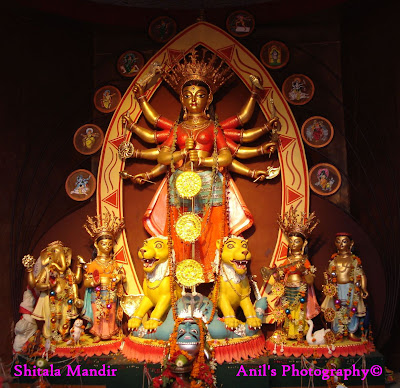

Festivals : There is a Bengali proverb - “Baro Maase tero Paarban”, which means in twelve months, thirteen festivals. Durga Puja is the most notable festival of Bengalis which celebrated every year like a carnival. It’s a religious and social festival of Kolkata. Other notable festivals include Deepavali, Eid, Christmas, Holi, Poila Baishakh (Bengali new Year), Saraswati Puja, Rath Yatra. Among the cultural festivals “Kolkata Book Fair” is the most popular and its now a yearly event which takes place in the month of January every year.

Indulgence to foods & sweets: As already mentioned about Kolkata that it is a city of best sweets and cuisines. Food and sweet are the two greatest indulgence of Kolkata people. Kolkatans love to eat and also they re great hosts. Every meal, ends with choicest sweets and Misty doi (sweetened curd). The unique range, quality, taste, variety and cheap rates of sweets can leave you amazed. The kolkata sweets are best sweets in India and unparallel in quality. Misty doi (sweetened curd) and confectionery of Patali Gur (date palm jaggery) are two delicacies of Bengal.
Besides Mughlai (tandoori, kebabs, biriyani etc.) Continental, Thai, Tibetian cuisines, Chinese cuisines are also very popular in Kolkata. Authentic quality Chinese cuisine is available in the eating houses/ Restaurants in Old China Town run by the Chinese people. Kolkata is also having varieties of quality foods on the streets. These foods are cheaper and there are some reputed points in the Dalhousie and Esplanade area. These points are only open during day time for the office goers and visitors to the city. We can proudly say that this kind quality foods are not available out side this city. Non-Indian food outlets like KFC, Macdonalds are present in the city. Junk foods are too available in every corner of the city. The Phuchka of Kolkata (Pani Puri in Bombay, Gol gappe in Delhi) is the best and nowhere this quality of Pani puri is available in India.

Dakshineshwar Temple
Places of Interests :

Besides Victoria Memorial which is land mark of Kolkata, other places of interests are Science City, Indian Museum, Birla Planetorium, Nicco Park, Botanical garden, Iskcon Temple, Belur Math, Kalighat, Dakshineswar kali Temple, Tagore House, Swabhumi, City Centre and South City Malls.
Belur Math


Nicco Park, Salt Lake, Kolkata

Mani Square Mall, Kolkata

City Centre-II & Swiss Hotel, Newtown, Kolkata
 Road to Airport through Newtown


Wednesday, January 28, 2009

A Riverine Nirvana : Sundarbans

Sundarbans is the location for them who like nature in its wildest forms. Sundarbans offers you a very extra ordinary natural scenic views and a journey through a riverine waterways for a lifetime experience. We experienced this journey throgh riverine waterways of Sundarbans on 23 and 24 January 2009.

It is also the perfect place for the ordinary holiday makers who desire to be away from hustle bustle city life for few days. Its only 100 KM from the city Kolkata.

Sundarbans, literally means beautiful forest, is a combined forest spread in Bangladesh and India. The vast swampy delta of the two great Indian rivers, Brahamaputra and the Ganges extends over areas comprising of mangrove forests, swamps and forest island all interwoven in a network of small rivers and streams. Sundarbans is the biggest mangrove forest in the world and is a treasure island of bi-odiversity. The Sundarbans has been declared a World Heritage Site by UNESCO in 1996. The part of the forest within Indian Territory is called Sundarbans National Park and is in the district of South 24 Parganas of West Bengal, India. The Sundarbans National Park is the home of the Royal Bengal Tiger. The tigers have adapted themselves very well to the saline and aqua environs and are extremely good swimmers. Nowadays, a behavioral change being observed in them as they are frequently coming to the villages despite of presence of natural food like deer, pigs etc sufficiently.
Sonakhali (100-kms), Raidighi (76-kms), Canning (64-kms), and Najat (92-kms) from Kolkata (Calcutta), which are all near the Sunderbans and have access to the riverine waterways leading to it. We reached Sonakhali jetty at about 1030AM and took a journey by Launch to Sajnekhali. Reached Sajnekhali at about 0230PM and checked in in the WB Govt. Tourist Lodge.

(Seven points where seven rivers meet)
We visited two watch towers at Sudhanyakhali and Dobanki through waterways while watching both the banks. While moving on waterways, various types of trees can be seen on the banks. While sailing to Dobanki you can see the Saptamukhi, the seven points where seven rivers meet.

(Sunset at Gosaba)

Thursday, January 15, 2009

Bada Imambada : Lucknow

The Bada Imambada or Asafi Imambada was built by Nawab Asaf-ul-Daula in 1784 as a relief work during the terrible famine that year. Apart from the galleries in the interior, there is no woodwork anywhere. The interior vaulted hall, measuring 162 feet in length, 53 feet in width and 50 feet in height, is said to be one of the largest apartments of its kind in the world.

From the outside, a staircase leads to a series of artfully designed labyrinths (bhoolbhulaiyan) where it is very easy to get lost. You can wander through the zigzag narrow galleries for hours without finding your way out! It/’s a very eerie sensation, moving towards the sunlit corridors that seem to be going out, only to find that you are actually deeper in the labyrinth. Most visitors therefore are only allowed inside with guides who are familiar with the maze.

The great site was visited by me in the month of May 2008. During my visit what I saw was that the maintenance of the historical monument is very poor. One can conclud this from the accumulation of dust inside the durbar hall. Full of dust.

Sunday, September 28, 2008

City of Lakes : Nainital

A small town in the hills of Kumaon, Nainital is a lovely hill station surrounded by mountains on three sides. Nainital is also known as the city of lakes attracting millions of tourists every year worldwide. Nainital is set in a valley containing a pear-shaped lake, Naini Jheel named after goddess Naina, approximately two miles in circumference, and surrounded by mountains.
Mall Road, in the evening
Saat Tal
Township from Naini lake

Thursday, August 28, 2008

Switzerland Of India

Kausani - Early morning clouds descended to the valley

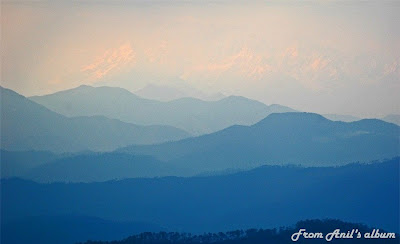
KAUSANI is known as the “Switzerland of India”. After my visit to Kausani, this summer, I find it as an ideal destination for those who seek to escape from the din and dust, hustle and bustle of big cities and wish to spend a quiet holiday in the lap of nature. Here, in the early morning, the birds sing for you to rise. Indeed, Kausani is a veritable heaven of beauty and it makes you feel that heaven has descended on this earth and the beauty of nature and heavenly calm of the place will inspire you to think differently. It is situated at a height of 1890 meters (from the sea level) in the Kumaon range of mountains. Kausani commands an unobstructed view of the Himalayan peaks. Several snow- capped peaks of Himalaya stand in a row, over 300 kms. in length, are visible from Kausani and enviable spectacle (if the climate favours you).


Every moment it changes its picturesque beauty. From the hotel rooms it is sometimes seen that the clouds are stagnant at the valley and the same is fully covered by the thick clouds which looks like a ocean of snow.

The peaks of Kumayun ranges spreads over the regions looks like paintings on a canvas with little variation of colors and stand like layers. These picks are sometimes covered by the clouds and nothing can be visible underneath. The thick white clouds comes down to the valley and stagnant there when you will feel like walking on those clouds because they are below your level. In the early morning from my Hotel rooftop when I found the entire area has been covered by thick dense clouds like snow, I wished walking on the clouds. T
Natural beauty, a heavenly calm inspired to think about the vastness and beautiful creation of the God. The natural beauty, calmness, clouds and Himalayan peaks standing tall at the horizon inspired me to bring out the poet in me to compose the following poem :

KAUSANI


I met her in an evening dusky and rainy
Attracted me, as if known for years many.

Welcomed me raising her large eyes to my face,
Four eyes met and made everything into a mess

Her happiness reflected on her cloudy face,
Breezy evening set my heart in faster pace.

We came closer, felt the presence of each other,
Slowly opened her beauty with her peaks and cedar.

Eyes were meeting while watching the peaks few,
I was gazing her peaks and curves that she knew.

Splendid beauty of the valley, like a trove, 
Moving clouds form a lady on the move,
Seen the similarity of nature and women,
Beautifully crafted by God, both of them.

Windy breeze made hairs out of control of hers, 
She was shy, raised her arms to knot the hairs.

I imagined her body turned into a great posture,
Smiled at me, I mutely thanked for her gesture
Her breasts like peaks raised, lovely and inviting,
She appeared to me as a beautiful painting.

Calmness came in the valley, after the wind and rain,
But we were unrest to come closer, suffered the pain.

She came closer looked at me, at last,
Walked through clouds, landed on the terrace,
She mutely hinted me to follow her fast,
Her lovely valley waited long for me to embrace.

She came nearer and asked me again to follow,
She took me to the clouds in the valley below. 

While walking with her on the clouds under the sky,
I told her I had seen you somewhere, don’t be shy.

Tell me your name my dear lady, if I am right,
With her smile and glances she looked bright.
I am Kausani, don’t you know my dear?
She was shy, wanted my name to hear.

My love story with Kausani ended suddenly,
Filled with her memory, I left Kausani sadly.
I still carry memory of her for tomorrow,
I lost her in the valley with pain and sorrow,
Her valley, peaks, mountains and pine,
Lives in my memory, treasures of mine.
Copyright : Anil 2010

Wednesday, August 27, 2008

Almora

Sunset at Almora
Almora is situated in Uttarakhand state of India. The township of Almora is the district headquarter and has all the facilities for tourists. This ancient hill station is reputed for it’s healthy climate and is perched on a five Km. long horse saddle shape ridge in. Rabindranath Tagore spent some times at Almora and composed some of his poems here. In May and Jun, the climate is very pleasant and best for visitors.One can have a panoramic view of the snowy peaks of Himalayas on any clear day and in addition a glimpse of the township.Swami Vivekananda too visited this town during his mission to travel from Himalaya to Kanyakumari.
Almora town

Tuesday, August 26, 2008

Queen's Meadows : Ranikhet

It was a favourite place of the queen of Chandraja Suridev. This is what made the place known as Ranikhet (Queen’s Meadow). In clear sky snow capped Himalaya ranges – Nandadevi, Neelkantha, Kamet Gouriparvat, Hatiparvat, nandagunti, Trishul, Nandakote and many more peaks are visible from this place. The place is having natural beauty decorated with Pine, Ceeder, Oak, Cyprash etc. It is situated at a height of 1829 meters. It is the HQ of Kumaon rifles.
Ranikhet

Ranikhet

Tuesday, June 24, 2008

Temples of Love : Khajuraho

One of the most celebrated manifestations of Indian architecture is to be found in a group of temples at Khajuraho in central India. Situated a hundred miles south-east of the town of Jhansi in the modern-day state of Madhya Pradesh.

Once a great chandela capital, Khajuraho is now a quiet village. The town of exotic temples, Khajuraho is one of India's major tourists and honeymoon attractions. They are India's unique gift to the world, representing a melody to life, which encompasses all emotions ranging from love, sex and joy. Life, in every form and mood, has been captured in stone, testifying not only to the craftsman's artistry but also to the extraordinary breadth of vision of the Chandela kings.

The city was once the original capital of the Chandela Rajputs, a Hindu dynasty that ruled this part of India from the 10th to the 12th centuries. The Khajuraho temples were built over a span of a hundred years, from 950 to 1050. There were originally over 80 Hindu temples scattered over an area of about 8 square miles of which only 22 now stand in a reasonable state of preservation.


The temples of Khajuraho underwent destruction by early Muslim invaders. Following their abandonment, a number of them survived to be discovered by the British in the 19th century.


Thousands of artisans worked on stones and they created the most beautiful figures on the temples. Khajuraho statues of stones speak, sing, dance which seems to be alive and coming out of temple walls.

All the erotic sculptures are at the outer walls of the temples. But there is no erotic sculpture inside the temples. In fact, inside most of the temples there is nothing- just silence, a cool peaceful milieu, with the vibes of thousands of years of people meditating there.


Sunday, June 22, 2008

Valley of the God : Manali

Manali in the Beas River valley, at an altitude of 1,950 mtrs, is an important hill station in the Himachal mountains of Himachal Pradesh, India. Manali and its surrounding areas are of great significance to the Indian culture and heritage as it was the home and abode of the Saptarshi or seven sages. The ancient cave temple, Hidimba Devi Temple is not far from town.

Manali is named after the Brahmin lawgiver manu. The word Manali literally means “the abode of Manu”. Manali is known as the "Valley of the Gods". The Old Manali village has an ancient temple dedicated to sage Manu.

It is famous for adventure sports like skiing, hiking, mountaineering, para gliding, rafting, trekking, and mountain biking. It also offers hot springs, spectacular religious shrines and temples, Tibetan Buddhist temples.

Rohtang Pass, at an altitude of 13,050 feet above sea level, is another adventure tourist site where it can be cold even on a summer day. It is the highest point on the Manali-Keylong road and provides a wide panoramic view of mountains rising far above clouds, which is truly breath taking.

Queen of the hills : Simla

In 1864, Shimla was declared the summer capital of the erstwhile British Raj in India. A popular tourist destination, Shimla is often referred to as the "Queen of Hills". Located in north-west Himalayas at an altitude of 2,130 metres, the city of Shimla, draped in forests of pine, rhododendron and oak, experiences pleasant summers and cold, snowy winters. Shimla is connected to the city of Kalka by one of the longest narrow gauge railway routes in India. Shimla is approximately 115 km (71.4 miles) from Chandigarh, the nearest major city, and 365 km (226.8 miles) from New Delhi, the national capital. The city is named after the goddess Shyamala Devi, an incarnation of the Hindu Goddess Kali.